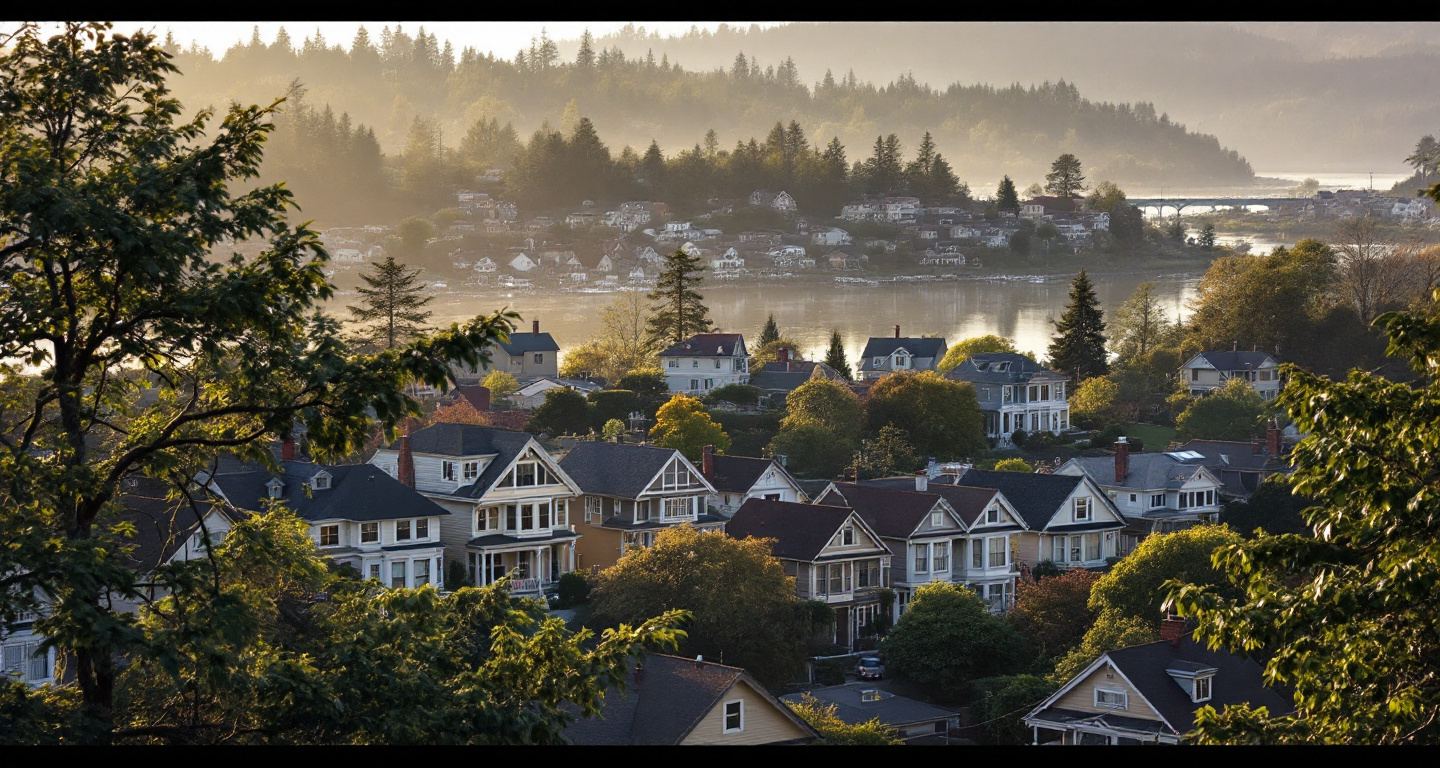
For homeowners here, that mix of housing eras and suburban geography shapes heating and cooling decisions in ways worth understanding before calling anyone for service or equipment. General background on cooling systems is at https://en.wikipedia.org/wiki/Air_conditioning.
A substantial portion of Clackamas's residential neighborhoods dates from the late 1950s through the 1970s. These homes were built before energy codes became meaningful, which means duct systems were sized for original construction and have since been patched, extended, or simply left unchanged as uses shifted. Insulation in the attic and walls may be partial or below current standards. Crawl spaces under raised-foundation homes are common, and when unconditioned and poorly sealed, they become pathways for cold air to infiltrate in winter and for moisture to accumulate year-round.
The practical consequence is that even a well-functioning furnace or heat pump will struggle if the duct and envelope work has not kept pace. Rooms farthest from the air handler tend to run hot in summer and cool in winter. Homeowners in these neighborhoods often find more comfort and efficiency gains from addressing the envelope and ductwork than from replacing equipment outright.
Subdivisions built in the past two decades arrived during a period when heat pump technology and energy codes both improved significantly. Many of these homes came with heat pumps pre-installed, tighter envelopes, and better-insulated ducts from the start. For owners in these homes, the questions tend to be different: whether the system is properly sized for the home's actual load, how to get the most from a heat pump in shoulder seasons, and whether controls and zoning are optimized for the household.
Oregon's climate in the Willamette Valley is genuinely well-suited to heat pumps. Winters are cool and wet rather than deeply cold. The days when outdoor temperatures drop low enough to challenge a heat pump's efficiency are relatively few and concentrated into brief cold snaps rather than sustained freezes. Modern heat pumps handle the typical Clackamas winter more capably than older systems required, and for homes on electric service, the efficiency advantages are real across most of the heating season. For a local example of HVAC service in the Clackamas area, see https://sites.google.com/view/efficiency-heating-cooling/service-areas/clackamas.
The Clackamas area is not dramatically hilly, but the land rises gently toward Happy Valley and the hillier terrain of outer southeast Clackamas County. Homes on elevated ground or exposed to particular wind angles can experience noticeably more heat loss in winter. The commercial density along the Sunnyside corridor also means nearby homes can experience urban heat effects less present in quieter residential pockets a few blocks away.
The marine influence from the Pacific keeps summers cool by national standards, but the area does see stretches of genuine heat, and regional temperatures have trended warmer. Cooling equipment that seemed optional a generation ago is increasingly a practical consideration. Homes that rely solely on window units or fans are more likely to be uncomfortable during summer heat events than they were when the housing stock was new. Adjacent Happy Valley is covered at https://sites.google.com/view/efficiency-heating-cooling/service-areas/happy-valley.
For most Clackamas homeowners, the starting point for any significant HVAC decision should be understanding what the home actually needs rather than defaulting to like-for-like equipment replacement. An older ranch home on a quiet street east of the Town Center has different priorities than a newer two-story off Sunnybrook Road. The former likely benefits most from envelope and duct attention before or alongside equipment work. The latter may be well-served by focusing on controls, maintenance, and ensuring the existing system operates as designed.
The community's proximity to contractors serving the broader Portland south metro means real service options exist. The challenge is less about availability and more about ensuring work addresses the specific character of the home rather than applying a standard solution to a varied housing stock.