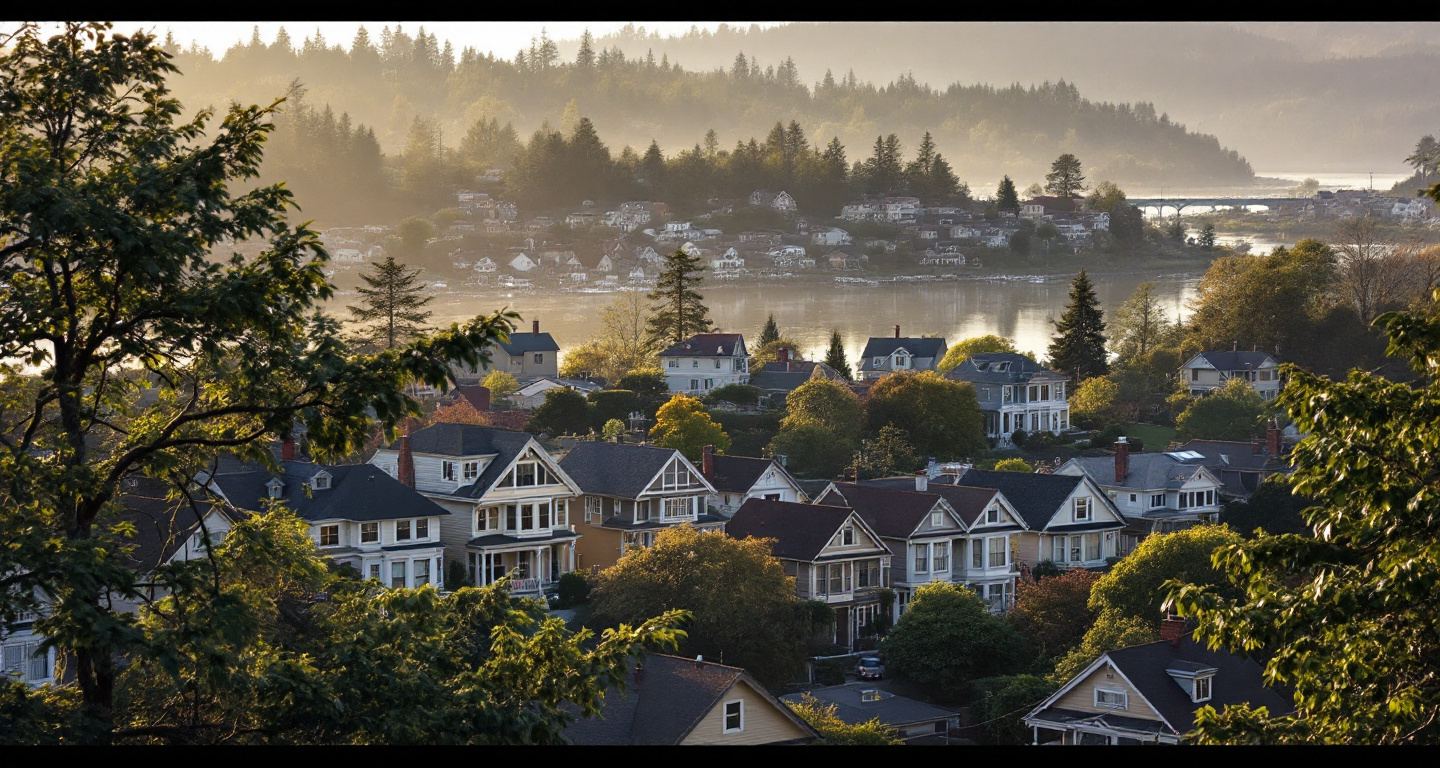
Custom homes are common in Stafford. The larger lots attracted buyers who wanted room to build something substantial, and many residences on those wooded hillside properties are multi-level homes with finished basements, detached garages, and square footage unusual in a standard subdivision. A system sized for a compact ranch house will not meet the load of a sprawling custom home with vaulted ceilings, extensive glazing, and wings facing different directions. Sizing matters here more than in denser neighborhoods where homes of predictable scale line up on predictable lots.
Zoning is worth serious consideration. When a kitchen wing heats up under afternoon sun while bedrooms stay cool, or a finished basement runs warmer than the main floor, a single thermostat cannot manage the whole picture. Multi-zone systems — whether ducted with zone dampers or ductless multi-split — let different areas operate independently. For a house where adults use one end and children use another, or where a detached structure like a guest cottage sits on the property, zoning is often the practical answer rather than a luxury. Regional efficiency-incentive information is in Energy Trust of Oregon.
Not every Stafford home is on natural gas. Propane tanks and oil-fired furnaces are less common than they once were, but some rural-residential homes still rely on them, particularly older homes built before gas service reached these roads or where utility extensions were not economical. Running a legacy fuel system through another decade is always an option, but operating costs for liquid fuels have made the comparison to modern electric heat pumps worth doing carefully.
A cold-climate heat pump handles temperatures that would have rendered older models ineffective, and the Pacific Northwest's relatively mild winters fall well within the range where modern equipment operates efficiently for most of the heating season. For a home currently on propane or oil, replacing the heating system with a heat pump often reduces fuel costs meaningfully and consolidates heating and cooling into a single system. That integration matters on a property where a separate air conditioning unit might otherwise require additional investment. For a local example of HVAC service in the Stafford area, see https://sites.google.com/view/efficiency-heating-cooling/service-areas/stafford.
Stafford benefits from the same marine-influenced climate as the rest of the Portland metro — mild, wet winters and dry summers with only occasional heat spikes. Compared to central Portland, the wooded and low-lying parts of the Stafford basin can experience more pronounced temperature inversions on clear winter nights, with cold air pooling in creek bottoms and frost arriving earlier than on nearby open ground. Summer comfort depends significantly on lot exposure. Homes with south-facing windows and minimal tree canopy can run warm in July and August even in a generally mild region, and the same homes that feel comfortable in a cool spring can become genuinely uncomfortable during a multi-day heat event. Cooling capacity that feels like an indulgence in a cloudy year becomes important insurance in a hot one. Neighboring Tualatin is covered at https://sites.google.com/view/efficiency-heating-cooling/service-areas/tualatin.
Properties in Stafford are often at the end of longer driveways, sometimes on private roads, and the distances between homes mean service visits look different here than on a dense suburban street. Equipment access matters: homes where a furnace sits in a crawlspace under a steeply-sloped hillside section, or where an outdoor unit must be sited to avoid grade drainage issues, require more planning at installation than a flat-lot suburban job. Well and septic properties add another layer for any work involving ground disturbance. These are practical realities rather than complaints about the area — they are part of what makes Stafford the kind of place people choose deliberately, and a sensible approach to home comfort accounts for them from the start.