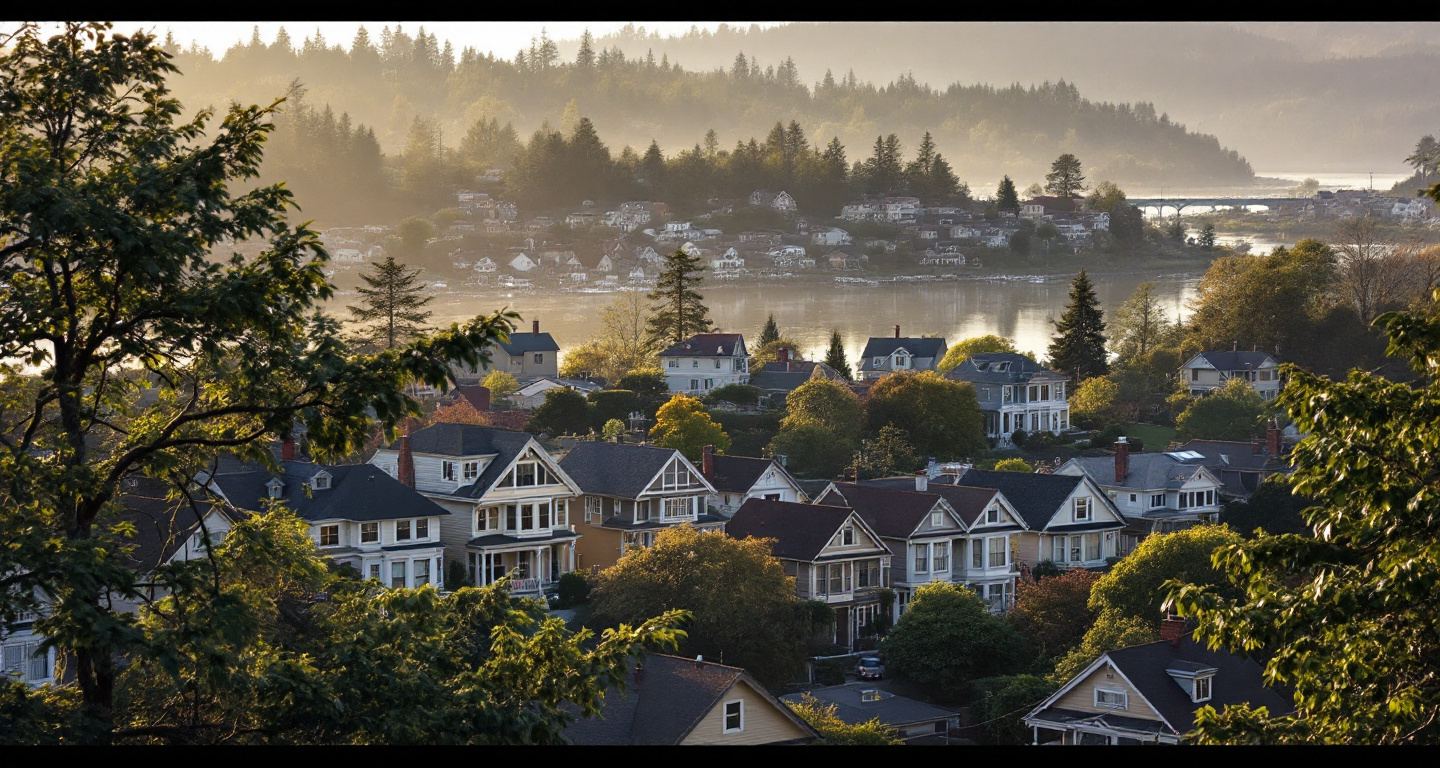
Lower Oregon City, near the base of the bluffs and along the Willamette, sits in a natural cold-air basin. In winter, cold dense air drains down the hillsides and settles along the river corridor. Homes there can see noticeably colder overnight lows than properties a few hundred feet up the hill, and morning fog from the Willamette lingers longer. Upper Oregon City, on the plateau and the newer hilltop subdivisions, catches more wind and tends to dry out faster after rain but can feel the brunt of easterly outflow winds during winter cold snaps.
Willamette Falls, just upstream, adds persistent moisture to the microclimate around lower town. That dampness works its way into older structures with less insulation and looser building envelopes, making humidity management a genuine consideration. A heating system that moves warm air without addressing moisture leaves occupants feeling clammy in winter and stuffy in summer even when the thermostat reads correctly. Background on heat-pump systems for older homes is in the Department of Energy heat-pump guide.
Oregon City's history as the earliest city of its kind west of the Rockies means a substantial portion of its housing predates modern mechanical systems entirely. Late-nineteenth and early-twentieth century homes in the historic core were built for wood stoves and fireplaces, with plaster walls, tall ceilings, and floor plans that reflect Victorian sensibilities rather than energy efficiency. Many were retrofitted with oil or gas furnaces over the decades, with ductwork shoehorned into attics and crawlspaces — often imperfectly. Leaky duct systems in homes like these can lose a meaningful share of conditioned air before it reaches the rooms it is supposed to serve.
Preserving the character of a historic Oregon City home while improving its mechanical systems requires care. Adding ductwork in a home with plaster ceilings and original woodwork means difficult choices about routing. Spray foam and aggressive air sealing, while effective in modern construction, can create moisture problems in older homes because those structures were designed to breathe in ways that balanced the dampness of the climate against their original materials.
Oregon City is exactly the kind of place where ductless heat pump technology found some of its most compelling applications. A historic craftsman on the south slope of the bluff, with plaster walls, a low crawlspace, and no practical path for a full duct system, becomes much easier to serve with one or two wall-mounted air handlers connected to an outdoor compressor. The disruption to original fabric is minimal: a small penetration through the exterior wall, refrigerant lines, and a conduit. The result is a heating and cooling system that can address individual rooms or zones, which matters in a home where the south-facing parlor overheats on a summer afternoon while the north bedroom stays cool all day.
Ductless systems also handle elevation differences within Oregon City well. A home built into the hillside may have multiple levels exposed to different wind and sun simultaneously. Zoned equipment heats the lower level separately from the upper rather than running one system that averages the whole house and leaves someone uncomfortable on every floor. For a local example of HVAC service in Oregon City, see https://sites.google.com/view/efficiency-heating-cooling/service-areas/oregon-city.
The Willamette Valley climate brings mild but persistently wet winters and dry, warm summers. Oregon City's position near the confluence of the Clackamas and Willamette rivers amplifies the moisture side of that equation. Crawlspace vapor barriers, attic insulation, and ventilation work together with any mechanical system to make a real difference in comfort and in equipment longevity.
Summer cooling needs in Oregon City are genuine but seasonal. The plateau neighborhoods can get warm enough during heat events that a home without cooling becomes difficult to occupy. For older homes without central air, a ductless system installed primarily for winter heating delivers summer cooling as a natural byproduct — a practical pairing that fits the city's mix of old housing stock and real seasonal heat.
The municipal elevator is a charming artifact of Oregon City's terraced geography. The HVAC decisions that geography imposes are less charming but no less real. Understanding whether a home sits in the river basin or on the upper plateau, on a shaded north slope or a sun-exposed south bluff, is the necessary starting point for getting home comfort right in Oregon City.