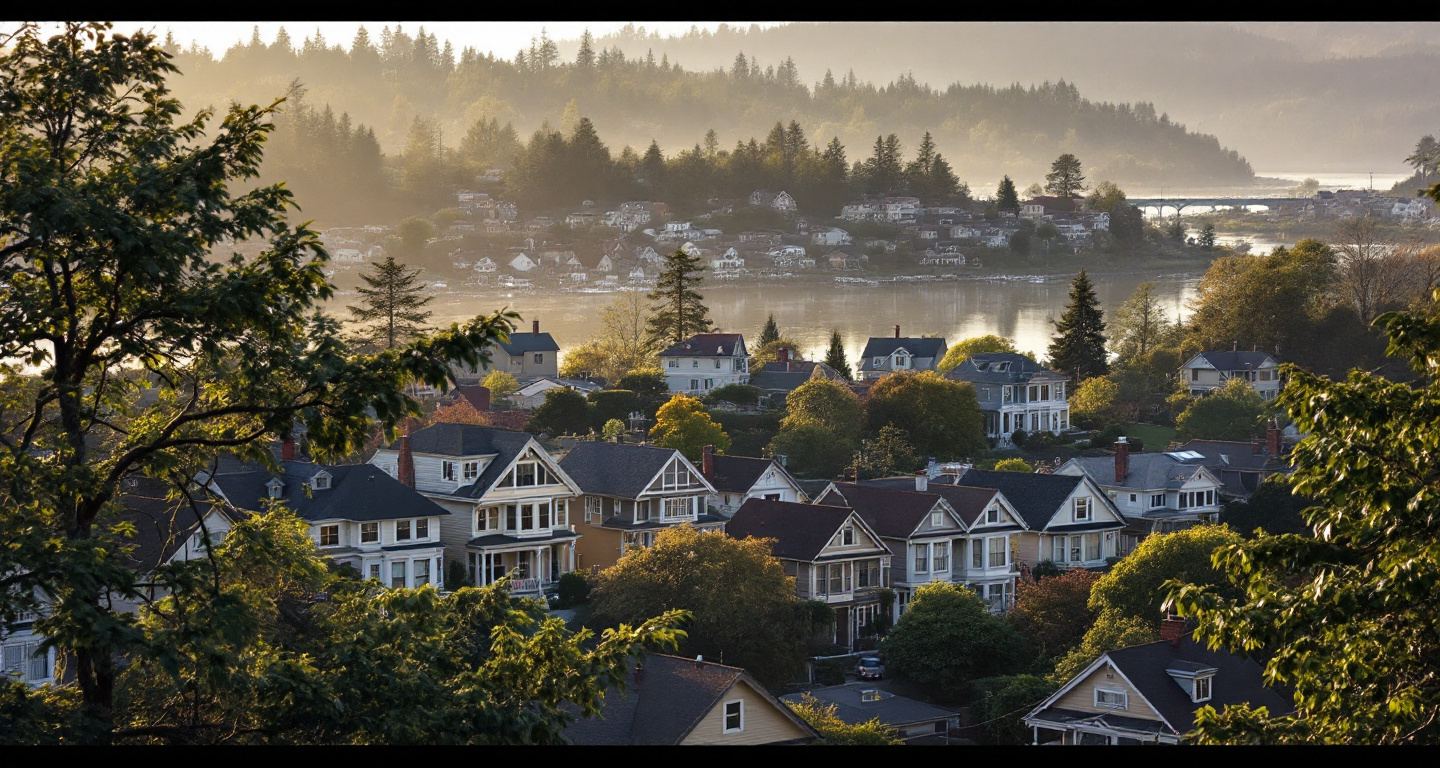
The south and southeast reaches of the Portland metro sit apart from the rest of the valley in ways that matter the moment a homeowner starts comparing heat pumps or calling about a furnace. This is a corridor defined by the Willamette River and its bluffs, by the quiet of Stafford Road farm country and the bustle of Oregon City's historic downtown, by neighborhoods where a Victorian-era bungalow sits two streets over from a recent two-story with a three-car garage. The communities here — Oregon City, West Linn, Canby, Clackamas, and the semi-rural patchwork of Stafford — share a general climate, but the specifics of terrain, construction era, and lot type push heating and cooling decisions in noticeably different directions from one address to the next.
The Willamette River corridor creates its own thermal behavior. Cold air drains from the surrounding hills into the valley floor on clear nights, producing temperature pockets that differ from any regional forecast. Homes along the river and in the lower portions of Oregon City's terraced hillside can sit several degrees cooler than homes on the bluffs directly above them. This drainage pattern also concentrates moisture, which affects how hard a forced-air system works against infiltration and how readily humidity problems develop in homes without adequate ventilation. For federal guidance on energy-efficient home equipment, see the ENERGY STAR program.
Oregon City's geography is the most dramatic illustration of south metro variety. The city sits on two distinct levels: the lower historic core at river grade, where older housing stock faces persistent moisture and heating loads that modern insulation standards would have addressed decades ago, and the upper plateau and terraced hillside neighborhoods, where exposure to prevailing southwest winds creates different demands in winter. The municipal elevator connecting those two elevations is a visual reminder that these aren't just different neighborhoods — they're different microclimates.
West Linn, spread across wooded ridges above the Tualatin River and the Willamette confluence, ranges from mid-century ranches to substantial newer construction. Elevation and tree canopy keep summer temperatures moderated, but certain exposures receive less solar gain in winter, which can work against heat pump efficiency in cold snaps if equipment isn't properly sized for that micro-exposure. Shading and terrain interact directly with system performance here.
Canby and the southern portions of Clackamas County are a different character entirely. On the flatter Willamette Valley floor, these communities face greater exposure to cold-air pooling and sometimes windier open conditions. Heating loads can be more pronounced, and summer afternoons here generate genuine cooling demand that the wooded hillside communities to the north tend to escape.
Stafford — largely unincorporated large-lot land between Tualatin, West Linn, and Sherwood — presents yet another pattern. Homes on acreage often lack natural gas service; construction spans modest mid-century structures to sprawling custom homes built in the last two decades. The combination of larger square footage, propane or electric-only utility service, and variable insulation quality across eras makes Stafford a particularly important case for thinking carefully about system design before any replacement decision. A general overview of home heating and cooling systems is at https://en.wikipedia.org/wiki/HVAC.
Across all of these communities, the housing stock introduces as much variation as the landscape. Oregon City's older blocks near the original townsite contain homes built before modern insulation, vapor barriers, and purpose-built forced-air systems were standard — homes where ducts were retrofitted into spaces not designed for them and crawl spaces remain untreated. Improving comfort here is rarely as simple as swapping equipment.
At the other end of the spectrum, newer hillside developments in West Linn and custom builds throughout Stafford represent tighter envelopes where the question becomes fine-tuning — zoning, humidity control, ventilation — rather than fundamental capacity.
Heat pumps have gained ground across the south metro, and the region's maritime-influenced climate, with its mild winters and moderate summer heat, is a reasonable fit. But terrain and exposure mean performance varies in ways general recommendations don't capture. A system well-suited to a newer home on a south-facing slope can be undersized for a drafty early-century bungalow on Oregon City's river grade, even if the two are only a mile apart. For local service-area coverage across the south metro, see https://sites.google.com/view/efficiency-heating-cooling/service-areas.
The pages that follow profile each south metro community in turn — the local housing stock, the microclimate considerations that shape equipment choices, and the comfort questions homeowners there most commonly face. The goal throughout is practical orientation: not a recommendation for any particular approach, but a grounded understanding of what the region's geography and built environment actually mean for the systems that keep homes comfortable across the seasons.